Biscoff Cookies and Café Drinks: Find Your Favourite Pairing
A cookie and a café drink can be a complete little occasion. The appeal is in the pause: something warm or cool to sip, a sweet bite on a plate and a few minutes without another task competing for attention. When the cookie is rich with biscuit spread, the drink helps shape how that break feels.
There is no single correct order. A short black coffee might suit someone who wants a pronounced contrast, while a milky coffee or pot of tea might be more comforting to someone else. Start with what you enjoy drinking, then consider whether you want to echo the cookie's sweetness or give it a quieter companion.
When choosing biscoff cookies, look beyond the flavour name to the filling, toppings and style of dough. A thick cookie with a generous spread centre is a different eating experience from a small crisp biscuit. Choosing the drink becomes easier once you know which version will be on the plate.
Start with the cookie in front of you
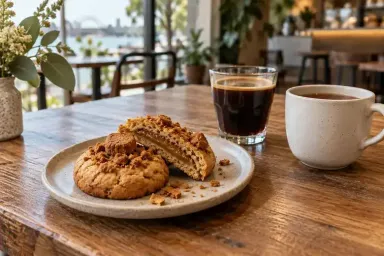
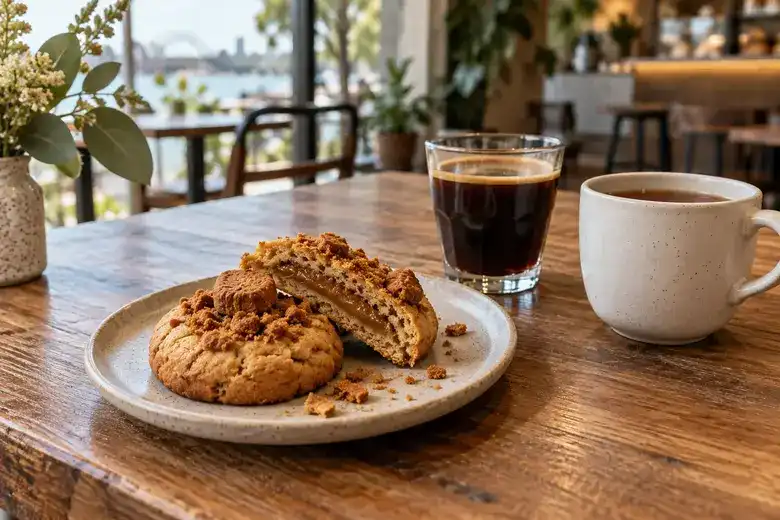
Read the description and, when ordering in person, ask what is inside. A cookie may have biscuit crumbs through the dough, a spread filling, a chocolate topping or several of those elements together. Each version gives you a different balance of sweetness, texture and richness.
Notice what you want to taste most. If it is the spiced biscuit flavour, a heavily flavoured drink might make that harder to pick out. If the attraction is a rich combination of chocolate and spread, you may enjoy a drink with enough presence to remain interesting beside it. These are useful starting questions, not a scoring system.
Portion size matters to the experience too. A large filled cookie can last through a slow cup of coffee, while a smaller biscuit may disappear in a couple of bites. Order for the break you want, and consider sharing a large portion if everyone is comfortable doing so.
Take the first bite without the drink. You may find the cookie less sweet, more chocolatey or softer than you expected. That first impression gives you a better basis for choosing a second drink or deciding what to try on the next visit.
Choose a coffee by contrast and comfort
A long black for a more distinct contrast
If black coffee is already part of your routine, a long black is a straightforward place to start. You can alternate small sips with bites of the cookie without adding another sweet flavour to the combination. Ask about the coffee on offer rather than assuming every long black will taste the same.
An espresso can also work for someone who enjoys a shorter drink, but its small volume means the coffee may be finished well before the cookie. That is not a problem. Keep water alongside and let the cookie take its own time rather than ordering a larger coffee solely to make the portions match.
A flat white or latte for a familiar pairing
A milk coffee is an easy option when comfort is the priority. Try your usual order first, especially if you already know how you like its balance of coffee and milk. You do not need to change both the food and the drink to make the break feel different.
The Office Coffee Company's February 2026 biscuit and coffee pairing guide suggests Biscoff alongside medium-roast coffee. That is a vendor's taste recommendation, not a universal rule. Use it as an idea to explore if the café offers a suitable choice, while keeping your own preference in charge.
If the menu language is unfamiliar, Bites by D's guide to understanding specialty coffee menus offers a starting point. At the counter, a simple description such as “a milk coffee with a clear coffee flavour” can be more helpful than trying to use terminology you are unsure about.
Give tea an equal place at the table
Tea deserves consideration even when the cookie is presented beside a coffee machine. A familiar black tea, with or without milk, gives you another way to enjoy a sweet bakery treat. Order it as you normally like it before experimenting with unusual additions.
Ringtons' October 2025 tea and biscuit pairing guide recommends considering tea strength, biscuit sweetness and texture together. Applied to a filled cookie, that is a useful prompt to think about the whole mouthful. It does not mean a particular tea is compulsory.
Chai can be appealing if you enjoy a combination of sweet and spiced flavours. Ask how the café prepares it, because a brewed tea and a sweetened concentrate may give quite different results. If your cookie already has a rich filling, you may prefer to taste the drink before adding anything extra.
For herbal or fruit infusions, choose a flavour you already enjoy. Some combinations will feel brighter or more aromatic than black tea; others may seem too busy beside the cookie. There is no need to defend the choice to anyone else. The useful question is whether you still enjoy both parts of the order.
Think about doubling the dessert
A Biscoff-flavoured latte and a Biscoff-filled cookie might sound like an obvious match. It can be enjoyable if you want the same flavour throughout the break. It can also feel repetitive if you hoped to notice the cookie's dough, chocolate or crisp topping separately.
Treat flavoured coffee, hot chocolate and sweet iced drinks as part of the dessert decision. Before adding a syrup or extra topping, consider what is already in the cup and on the plate. You can always try a richer combination another time; there is no requirement to order every variation at once.
An iced latte without added syrup offers another familiar option for people who prefer a cold drink. Check what the café means by “iced coffee”, since menus may distinguish it from an iced latte and include additional ingredients. Asking a quick question avoids getting a dessert drink when you expected something simpler.
Water is a useful companion whatever you choose. It gives you something plain between bites and is particularly welcome when a cookie is sticky or generously filled. A glass alongside also lets you finish dessert comfortably after a small coffee has gone.
Change one thing when tasting
If you want to discover a favourite pairing, keep the experiment small. Choose one cookie and your usual drink. On a later occasion, try a different drink with a similar cookie. Changing everything at once makes it harder to know which difference you actually enjoyed.
Use ordinary words when thinking about the result. You might notice that the cookie tastes sweeter after a sip, that the drink seems less interesting beside the filling or that a crisp topping is the most enjoyable part. You do not need professional tasting language to make a useful observation.
Sharing can make comparisons sociable, provided the food suits everyone. Two people can choose different drinks and discuss how each works with their own portion. There is no need to share cups, and no need to reach a verdict. Different preferences are a good reason to keep more than one pairing in mind.
Avoid turning the break into a checklist. A quick note about what you liked is enough if you want to remember it. Conversation, a comfortable seat and a drink made the way you enjoy it may matter more than finding an elaborate flavour explanation.
Let texture guide the serving style
A crisp packaged biscuit can usually be held easily, while a thick bakery cookie may need a plate and utensils. If the centre is soft, cut a small portion before lifting it. This keeps the filling on the plate and makes it easier to take a bite without balancing food over the cup.
Dunking is a personal habit, but a loaded cookie may not behave like a firm biscuit. Soft dough, toppings and spread can break away into the drink. Eating a bite and then taking a sip is a simpler way to combine the flavours while keeping the cup clear.
If the cookie is served warm, give the filling time to reach a comfortable eating temperature. For takeaway cookies, follow the maker's instructions about warming and storage. Avoid assuming that a method suitable for one filling or topping will suit every other version.
Keep leftovers in appropriate packaging and follow the supplied advice. A cookie left loose in a café bag can lose toppings or be crushed under other purchases. If you know you will only want part of it, asking for a takeaway container at the beginning is easier than improvising at the end.
Choose a café setting that suits the pause
The setting changes the occasion. A quick standing coffee suits a short break, while a seated visit gives you more room for a generous cookie and a pot of tea. Think about table space, noise and how much time you actually have before deciding where to go.
The guide to choosing the right café vibe can help you frame that choice. A lively room may suit a casual catch-up, while a quieter table may be better for conversation. Check the venue's current arrangements if seating or accessibility is important.
If you bought the cookie elsewhere, ask whether outside food is permitted before opening it at a café table. Some venues welcome it and others do not. Enjoying takeaway coffee and the cookie in an appropriate separate setting is an alternative when the café has its own food policy.
Bites by D's coffee etiquette guide offers more context for a considerate visit. Keep the immediate choices simple: ask clear questions, leave space for staff to work and choose an order that fits the time you intend to spend.
Check ingredients for the whole pairing
Do not infer the dietary suitability of a filled cookie from the reputation or ingredients of one branded biscuit. The dough, spread, chocolate, decorations and preparation environment all need consideration. Ask about the finished product rather than only one component.
Food Standards Australia New Zealand's allergen guidance, updated in September 2025, explains how food businesses provide allergen information. If you have a food allergy, seek the information relevant to the actual cookie and drink from the seller. A short flavour description is not a complete answer.
Include the beverage in that conversation. Milk choices, syrups, powders and toppings may introduce ingredients that matter to you. Choosing a different milk does not establish that the rest of the order meets a particular dietary requirement or that shared equipment is suitable.
For a group, let each person choose a portion and drink that works for them. Separate orders and utensils may be more comfortable than a communal tasting. Dessert is easier to enjoy when nobody feels pushed to try something they are unsure about.
Make a small pairing plan
For a coffee-focused break, start with a modest portion of cookie and your familiar long black or milk coffee. Notice whether you enjoy the contrast or would prefer a softer combination next time. Keep the first visit uncomplicated.
For a tea-focused break, choose a pot of black tea or another favourite and leave room on the table for a plate. Taste before adding extra sweetness. If you enjoy spiced combinations, a chai can be a separate experiment rather than an automatic addition.
For a richer dessert occasion, choose the flavoured drink you actually want and share the cookie if that suits the group. The aim is an enjoyable amount of food and drink, with enough time to appreciate it. A larger order is not inherently a better pairing.
A better coffee break is personal
The right pairing is one you would happily order again. It might be a strong coffee beside a sweet centre, a familiar tea with a soft cookie or a deliberately rich drink and dessert combination. Paying attention to the cookie, the cup and the setting gives you a useful starting point, while leaving plenty of room for your own taste.